
If you have seen photos of dolphins in captivity, you may have noticed something that looks wrong about the fin on top of their back. It droops to one side rather than standing upright. That bent or collapsed dorsal fin is one of the most recognizable signs of the difference between life in a tank and life in the open ocean, and understanding why it happens tells you something important about what wild dolphins actually need to stay healthy.
What the dorsal fin actually does
Before looking at what goes wrong, it helps to understand what the dorsal fin is for.
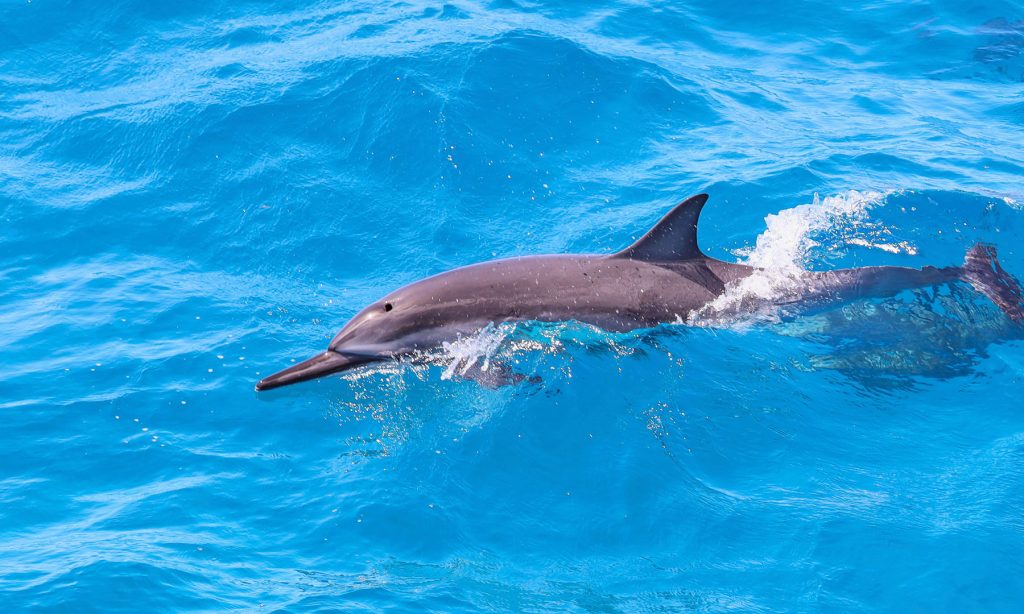
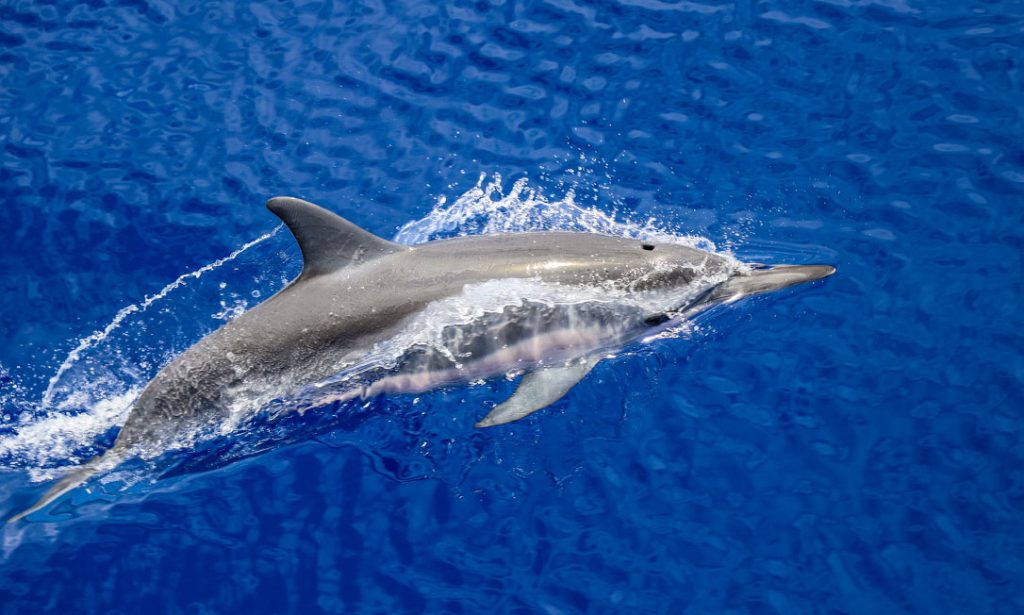
The dorsal fin serves four main functions for a dolphin in the wild. It acts as a stabilizer, working like a keel on a boat to keep the dolphin balanced during fast movement and tight turns. It assists with thermoregulation by acting as a heat exchange surface, allowing the body to release heat when the dolphin is active in warm water. It contributes to directional control, helping the dolphin pivot and maintain a steady course when chasing prey or evading predators. And it plays a role in social recognition: over time, dorsal fins develop individual nicks, scars, and markings that dolphins use to identify each other within their pods.
That last function is one reason researchers studying wild spinner dolphins off Hawaii’s Waianae Coast rely heavily on dorsal fin photographs. Each fin is as unique as a fingerprint.
Why does a dolphin’s dorsal fin bend?
A bent dorsal fin is caused by a breakdown in the cartilage that gives the fin its structure.
Unlike bone, cartilage does not have its own blood supply and depends on the physical compression and release of regular movement to stay healthy. In the wild, dolphins swim constantly and cover significant distances every day. Hawaiian spinner dolphins travel for hours each night during offshore hunting, then return to coastal bays where they continue to move through the water during their rest periods. That sustained activity keeps the cartilage in the dorsal fin firm and upright.
In captivity, where pool size limits the range of movement available to a dolphin, that mechanical stimulation is reduced or absent. Over time, the cartilage weakens, loses its structural integrity, and the fin begins to droop under its own weight. The process is gradual, and once it begins, it is essentially irreversible. Cartilage does not regenerate, and there is no treatment that rebuilds its structure once it has broken down.
Among wild dolphins in Hawaii, bent dorsal fins are rarely observed. The populations that rest along the Waianae Coast are free to cover large stretches of open ocean each night, and that natural movement maintains the physical health of their fins across their lifetimes.
Can a bent dorsal fin be fixed?
In most cases, no. Once the cartilage has lost its structure, returning the fin to an upright position requires conditions that do not naturally occur and cannot be reliably replicated. Rehabilitation programs have attempted various approaches, but the results have generally shown that the structural change is permanent.
Can dolphins survive without a dorsal fin entirely?
Yes, and there are documented cases of wild dolphins that have lost their dorsal fins through injury, shark attack, or entanglement with fishing gear, and continued to live full lives afterward.
Without a dorsal fin, a dolphin faces several ongoing challenges. Swimming requires more muscular effort to maintain stability and direction, which increases the energy cost of every movement. Thermoregulation becomes less efficient, which matters most in warmer water where the fin would normally help release excess body heat. And the social identification function is lost, meaning other dolphins in the pod must rely on other cues to recognize the individual.
Despite these challenges, dolphins compensate. They adjust their swimming style, lean on their intelligence and social bonds to stay integrated within the pod, and continue to participate in hunting and rearing young. Dolphin intelligence and social adaptability are significant enough that the loss of a single anatomical feature, even one this important, does not necessarily end a dolphin’s ability to function within its community.
Like the cartilage in a bent fin, the dorsal fin itself does not regenerate once lost. The adaptation is permanent, and the dolphin’s survival depends on its ability to adjust.
What this means when you are watching wild dolphins
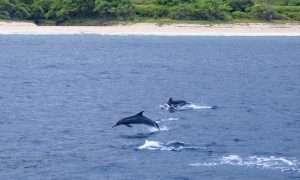
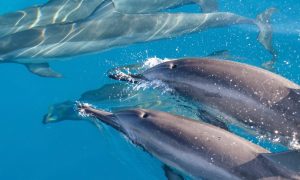
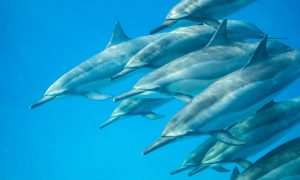
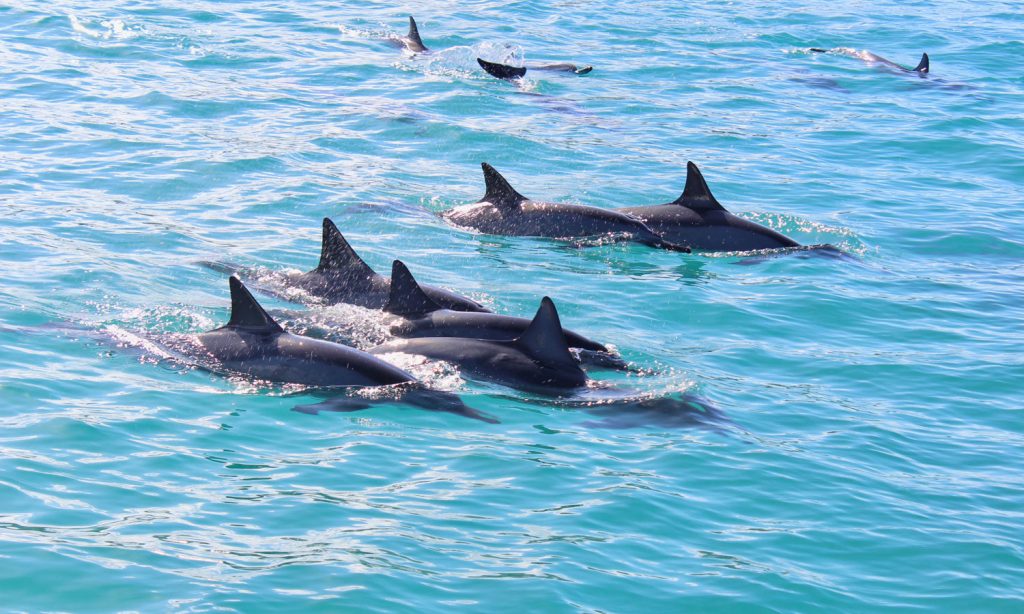
When you watch a pod of spinner dolphins from a Dolphins and You tour off the Waianae Coast, their dorsal fins tell a story. Upright, sharp-edged, sometimes nicked or scarred, they are the product of thousands of hours of open-ocean swimming. Every dolphin in that pod has been moving through deep water and coastal bays its entire life, and the physical condition of its fins reflects that.
The contrast with captive populations is not subtle. Wild dolphin fins stand upright because wild dolphins do what dolphins are built to do: swim long distances, hunt at depth, and live in a social world that requires constant movement.
<a href=”https://dolphinsandyou.com/oahu-dolphin-tour/”>Join us on the Waianae Coast</a> and see what a healthy wild population actually looks like from the water.
Want to learn more about how Hawaii’s spinner dolphins are built to survive in the ocean?
👉Return to the Spinner Dolphin Anatomy and Biology guide →
Tours depart from Waianae Boat Harbor, West Oahu, where Hawaii’s spinner dolphins gather every morning.